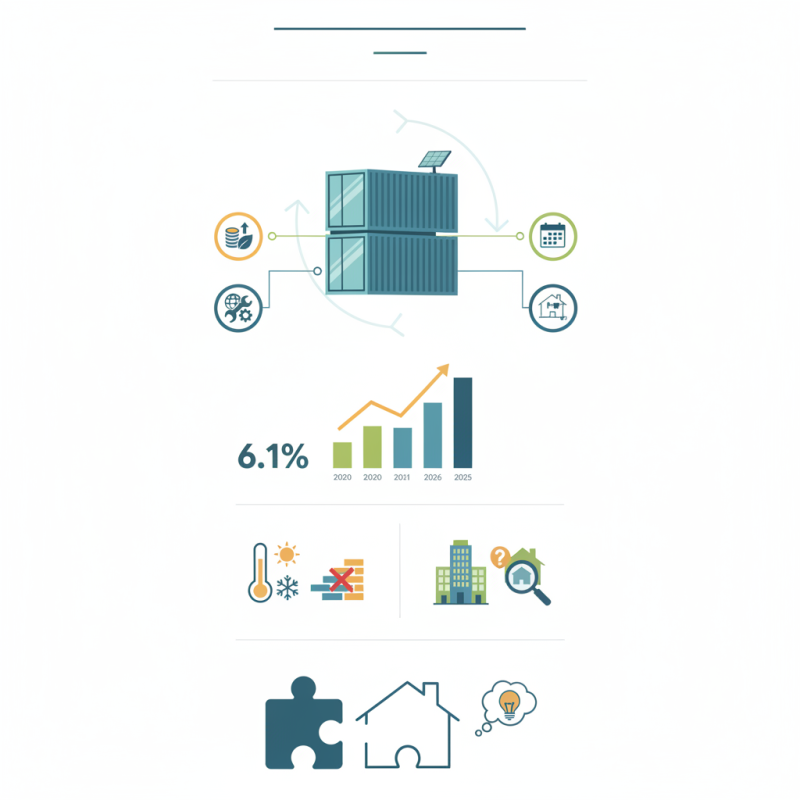
The concept of a Portable Container House is gaining immense popularity in today’s housing market. According to a report by ResearchAndMarkets, the portable housing market is expected to grow by 6.1% annually through 2025. This surge is driven by the need for affordable and flexible living solutions. Portable Container Houses offer unique benefits that traditional homes do not. They are cost-effective, environmentally friendly, and quick to assemble.
These structures can be used for various purposes, from temporary housing to permanent residences. Their modular nature allows for easy customization to meet specific needs. However, some challenges remain. For instance, proper insulation is necessary for comfort in extreme weather conditions. Moreover, zoning regulations can complicate placement.
The appeal of Portable Container Houses lies in their adaptability. They provide an innovative answer to housing shortages in urban areas. Many buyers are intrigued by their potential, even if they still have reservations. Addressing these concerns is vital for the future growth of this trend.
Portable container houses are gaining popularity due to their unique characteristics. These homes are made from shipping containers, which are strong and durable. They can withstand harsh weather conditions, making them ideal for different environments. Many people appreciate their modular design as it allows for easy customization.
The interior of a portable container house can be quite cozy. They often feature modern amenities. You can find comfortable living spaces, kitchens, and bathrooms. However, space can be limited, which may require creative storage solutions. It's essential to optimize every corner of the house. Think of multifunctional furniture to save space.
Tips for those considering a container home: Remember to plan your layout carefully. A well-thought-out design helps maximize space. Consider adding windows for natural light, which makes the space feel larger and more inviting. Also, check local regulations regarding container homes, as some areas have specific building codes that you must follow.
The emergence of portable container houses can be traced back to the mid-20th century. Initially, they served as temporary structures for construction workers. However, by the 1990s, they began to gain traction as affordable housing solutions. A study by Grand View Research in 2021 highlighted that the portable container market is projected to grow significantly. By 2027, it is expected to reach a value of over $73 billion.
These structures are favored for their versatility. They can be transformed into homes, offices, or pop-up shops. This adaptability has led many urban planners to consider them as viable solutions for housing crises. The American Institute of Architects has noted an increase in container home designs in urban areas. Such designs often challenge traditional construction norms. However, the aesthetic and structural limitations of these homes raise questions about their long-term viability.
Despite their popularity, there remain challenges. Insulation and ventilation issues can arise, impacting comfort levels. Local zoning laws may restrict their placement, complicating installations. Plus, there is an ongoing debate about sustainability. Some argue that using shipping containers promotes recycling, while others point to inherent environmental costs in their modification. Balancing these factors is essential for future trends in portable container housing.
Portable container houses have gained immense popularity due to their unique set of advantages.
One of the most notable benefits is their affordability. With lower construction costs, more people can afford their own homes.
A basic container house can be built for a fraction of the price of traditional homes. This makes them accessible for various income levels.
Mobility is another significant advantage. Container homes can be transported easily. If a homeowner's needs change, they can relocate without the hassle of selling a property.
This flexibility is appealing to many. However, not everyone appreciates this aspect. Moving a home can come with its own challenges and costs.
Additionally, container houses are eco-friendly. They repurpose old shipping containers, minimizing waste. This sustainable approach resonates with environmentally conscious individuals.
However, their insulation and structural integrity can be a concern. Not all containers are suited for long-term living. Proper renovation and insulation are necessary for comfort.
Portable container houses are gaining traction in various modern living applications. These structures offer a unique blend of mobility and affordability. They can serve as efficient living spaces, offices, or even pop-up shops. Many urban dwellers find them appealing due to traditional housing costs. Container houses often use recycled materials, making them eco-friendly options.
In urban areas, container houses are used as mini-homes. They fit into compact lots and require less space. This is ideal for cities where land is scarce. Some people convert them into vacation rentals, attracting tourists. This concept has led to innovative designs and creative layouts, even though some might find them cramped.
Tips for maximizing space in a container home include multi-functional furniture. For instance, a sofa bed can save room while providing comfort. Consider using vertical storage solutions, which can help minimize clutter. Remember, lighting can create an illusion of space. Natural light makes a big difference.
It’s essential to assess your needs clearly. Some may struggle with downsizing. The simplicity of a container home can feel overwhelming at first. Reflecting on what truly matters in living spaces can ease this transition. Do you really need all that stuff? Embrace the challenge and find joy in the minimalist approach.
Portable container houses have gained significant traction in recent years, thanks to a variety of compelling factors. The global market for these structures is expanding rapidly, with a projected growth rate of over 6% annually between 2021 and 2027. This surge is due, in part, to their affordability. Building a traditional home can cost upwards of $250,000, while a portable container house can often be constructed for less than $50,000. This gap makes them financially attractive to many individuals and families.
Sustainability is another important reason for their popularity. Container homes utilize repurposed shipping containers, which alleviates waste in landfills. The potential to enhance energy efficiency is also appealing. Studies show that container homes can be designed to use up to 30% less energy than conventional homes. However, they do require thoughtful consideration regarding insulation and ventilation. Some owners find them too hot in summer and cold in winter without proper systems.
Flexibility is a major draw as well. Container homes can be delivered nearly anywhere. This is especially beneficial for those seeking off-grid living or temporary housing solutions. Yet, issues like zoning regulations and land use laws can complicate their implementation. Not every area allows these homes, creating hurdles for potential buyers. The success of portable container houses lies in understanding the balance between innovation and regulatory challenges.
: They can serve as homes, offices, or pop-up shops. Their versatility appeals to many.
They started as temporary worker accommodations in the mid-20th century. Later, they became affordable housing options.
Their affordability, sustainability, and flexibility are major factors. They often cost significantly less than traditional homes.
Issues like insulation and ventilation can affect comfort. Some may feel cramped in these smaller spaces.
Consider multi-functional furniture and vertical storage. Good lighting can also create a more spacious atmosphere.
While they recycle shipping containers, their modifications can have environmental costs. This debate continues within the community.
Local regulations may restrict where these homes can be built. This complicates the installation process for potential buyers.
Assessing your needs is crucial. The minimalist approach can be challenging and may take time to embrace.
They can be designed to consume 30% less energy than conventional houses. However, insulation and ventilation are key factors.
The market is expected to grow over 6% annually until 2027, indicating rising interest in these structures.
A Portable Container House is a modular living space constructed from repurposed shipping containers, offering a flexible and sustainable housing solution. These structures are characterized by their durability, mobility, and cost-effectiveness. Since their emergence, Portable Container Houses have gained popularity due to the rising need for affordable housing and their ability to be easily transported to various locations.
The advantages of Portable Container Houses over traditional homes include their quicker assembly times, lower costs, and minimal land requirements. They are increasingly utilized in diverse applications, such as temporary housing, disaster relief, and modern urban living. Factors contributing to their growing popularity encompass environmental sustainability, innovative designs, and the ability to meet the demands of a dynamic lifestyle, making Portable Container Houses a viable option in contemporary housing solutions.

ZHONGHUI HOLDINGS