The concept of Mobile Detachable Container Houses is gaining significant traction in the housing industry. According to a recent report by Grand View Research, the global market for modular homes is expected to reach $157 billion by 2026. These innovative structures offer flexibility and cost-efficiency, appealing to homeowners and businesses alike.
Industry expert Dr. Emily Carter emphasizes the advantages of mobile detachable designs. She states, "These homes are not just eco-friendly; they also adapt to our ever-changing needs." The cellular structure of Mobile Detachable Container Houses allows for easy transportation and rapid assembly. This adaptability stands out, especially in areas where traditional construction methods are slow or costly.
Despite the numerous benefits, there are challenges to consider. For instance, regulatory barriers can complicate installation in certain regions. Additionally, the perception of container houses might be limited, influencing public acceptance. A critical view of these structures reveals room for improvement in design aesthetics and insulation methods. The ongoing evolution of Mobile Detachable Container Houses presents both opportunities and challenges for the industry.
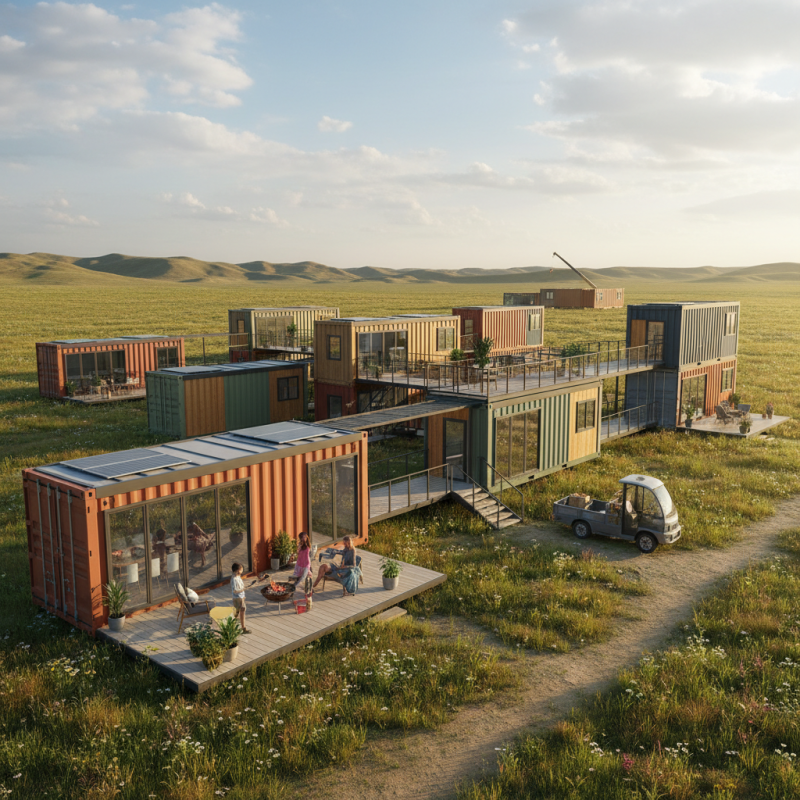
Advantages of Mobility in Container Housing Solutions
Mobile detachable container houses offer significant advantages in mobility. According to a recent report by Grand View Research, the global market for modular housing is expected to reach $157 billion by 2027. This growth highlights an increasing acceptance of alternative housing solutions. Container houses are lightweight and easy to transport. This flexibility allows homeowners to relocate with ease.
The mobility of container homes makes them appealing for various lifestyles. For example, workers in remote areas often require temporary housing. Container homes can be set up quickly and moved as needed. Some studies indicate that traditional construction can take up to six months. In contrast, a container house can be delivered and ready for use in a fraction of that time. However, the need for suitable land can sometimes pose a challenge.
Mobile homes also reduce construction waste. The average construction project can produce up to 30% waste, while container homes generally have a smaller footprint. Yet, there are concerns about insulation and weather resistance. These factors need proper consideration to ensure sustainability. Addressing these issues can lead to better designs in the future. While container homes are innovative, they are not without flaws. The ongoing evolution of this housing solution invites further exploration and improvement.
Flexibility in Space Utilization with Detachable Containers
Mobile detachable container houses offer unique flexibility.
These structures can adapt to various needs. For instance, they can serve as homes,
offices, or studios. Their modular design allows for easy relocation.
Need more space? Just add another container. This adaptability suits changing lifestyles.
Creating space with detachable containers is practical. They can be set up in urban areas or rural settings.
The ability to connect multiple units creates larger living spaces. This is especially beneficial for families
or businesses needing more room. However, some challenges arise. Proper planning is necessary to ensure functionality.
Addressing utilities and access points can be tough.
Designing these spaces offers creative freedom. Interior layouts can be customized easily.
Yet, some may struggle with limitations from the structural frame. It's essential to balance
aesthetics with functionality.
Emphasizing open spaces can enhance livability. Still, squeezing furniture into tight areas can be frustrating.
Adjusting to a modular lifestyle requires thoughtful consideration.
Cost-Effectiveness of Mobile Detachable Container Houses
Mobile detachable container houses are gaining popularity for their cost-effectiveness. They offer a unique solution for affordable housing. One key reason is the lower initial investment compared to traditional homes. This flexibility can be appealing for many individuals seeking budget-friendly options.
When considering these container homes, always assess your needs. A smaller size can lead to significant savings. Choose a layout that maximizes space efficiently. This way, you avoid unnecessary expenses. Think about how you’ll use each area. Effective planning can lead to a better living environment.
Tips: Look for ways to repurpose materials. Upcycling can reduce costs further. Keep an eye on local regulations to avoid potential issues. You might discover easy ways to improve your home while saving money. Consider the resale value as well. While the homes are affordable now, their value could increase over time. Reflect on how your choices today can impact your future finances.
Sustainability and Eco-Friendly Aspects of Container Homes
Mobile detachable container houses offer remarkable sustainability features. These homes utilize recycled materials, reducing waste significantly. According to a recent report, constructing with repurposed containers can reduce CO2 emissions by up to 90% compared to traditional building methods. This eco-friendly approach attracts environmentally conscious homeowners looking for innovative solutions.
Container homes provide natural insulation. They maintain temperature effectively, minimizing heating and cooling needs. This can lead to energy savings of 30-50% over conventional homes. However, not all designs maximize this efficiency. Placement, materials used, and design can impact energy performance. Also, while these homes are often marketed as eco-friendly, the production process and logistics still have environmental costs.
Flexibility is another key advantage. Container houses can be relocated easily, adapting to changing needs. However, their mobility also poses challenges. Sustainable landscaping and connectivity to utilities can be difficult when moving. Proper planning is essential to ensure the eco-friendly aspects remain intact. Awareness of these complexities is important for future builders. Embracing container homes means considering both their benefits and limitations.
Rapid Deployment and Assembly of Mobile Housing Units
Mobile detachable container houses offer rapid deployment and assembly, making them ideal for various needs. In disaster relief or temporary housing scenarios, these units can be set up quickly. Reports show that traditional construction methods can take months, while mobile units can be assembled in days.
When transporting these containers, efficiency is key. Skilled labor isn’t always readily available. Yet, modular design helps reduce construction errors and labor costs. According to industry studies, using these mobile homes can cut costs by up to 30% when compared to conventional builds.
TIP: Ensure proper site assessments before deployment. A smooth surface can make assembly faster.
Flexibility is another advantage. Mobile container houses can be rearranged or relocated with ease. However, they can face challenges concerning
zoning regulations. Many areas have strict rules regarding temporary housing. It’s essential to research and understand local laws beforehand.
TIP: Consider investing in a digital mapping tool. It can help identify suitable locations for your mobile units.
In conclusion, the rapid assembly of mobile container houses presents both
opportunities and
challenges. Their potential is great, but proper planning is crucial.
FAQS
: They are lightweight, transportable, and allow easy relocation for homeowners.
Container homes can be ready in a fraction of the time, unlike traditional homes that can take months.
They can serve as homes, offices, or studios, adapting to various needs.
Proper planning is needed for utilities and access, which can be complicated.
They generally produce less waste compared to traditional construction, which can create up to 30% waste.
Ensuring proper insulation and weather proofing is crucial for the sustainability of these homes.
Yes, evaluating your needs helps in selecting the right size and layout for efficient space utilization.
Yes, but there may be limitations due to the structural frame, so balance is essential.
Repurposing materials and choosing smaller sizes can reduce costs significantly.
Consider how your current choices will affect resale value and overall finances in the long run.
Conclusion
Mobile Detachable Container Houses offer a range of significant advantages, making them an attractive option for modern housing solutions. Their inherent mobility allows for easy relocation, which is ideal for both temporary and permanent spaces. Additionally, these units provide flexibility in space utilization, enabling users to adapt their layout to meet specific needs. Economic benefits are also noteworthy; Mobile Detachable Container Houses generally come at a lower cost than traditional construction, making them accessible for various budgets.
Furthermore, these container homes are designed with sustainability in mind. They often utilize recycled materials and can significantly reduce the environmental impact associated with conventional building methods. The rapid deployment and assembly of Mobile Detachable Container Houses also mean that they can be set up quickly, making them a practical solution for urgent housing needs. Overall, the combination of mobility, cost-effectiveness, sustainability, and ease of use positions Mobile Detachable Container Houses as a compelling choice in today’s housing market.

 ZHONGHUI HOLDINGS